Selling on Shopify is not only about getting products online. The store needs to attract the right visitors, guide them toward a confident purchase, and bring them back when they are ready to buy again. That is where e-commerce marketing becomes essential.
Tools like Klaviyo help Shopify businesses manage email and SMS marketing with better timing, better customer data, and more relevant messaging. Used well, they can support revenue, retention, and customer experience. Used poorly, they can create noise, discount dependency, and missed opportunities.
Why e-commerce marketing matters after your Shopify store goes live
A Shopify store gives you the foundation to sell online, but it does not automatically create consistent sales. Visitors may browse without buying, customers may only purchase once, and abandoned carts can quietly reduce revenue.
E-commerce marketing helps close those gaps by communicating with people at the right stage of their buying journey. It supports new customer acquisition, first-purchase conversion, repeat purchasing, and long-term loyalty.
If you are still planning or improving your store setup, it can help to review the basics first. Our guide to setting up a Shopify store covers the core foundations before you build more advanced marketing activity.
What Klaviyo does for Shopify marketing
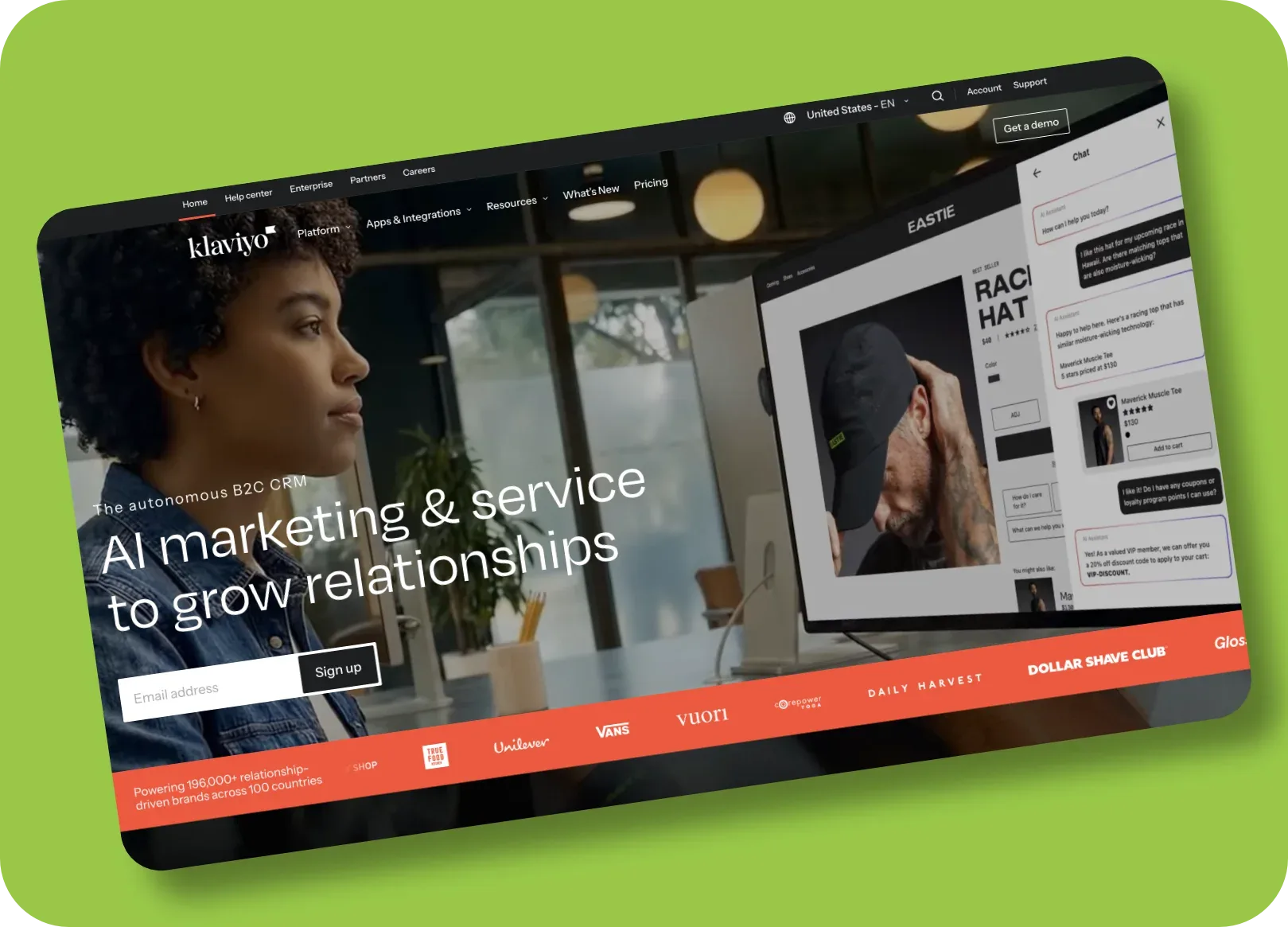
Klaviyo is a marketing automation platform commonly used by Shopify stores for email and SMS campaigns. Its value comes from connecting store data with customer communication, so messages can be based on actual customer behaviour rather than broad assumptions.
Customer data in one usable place
When connected to Shopify, Klaviyo can use customer actions such as product views, cart activity, purchases, order value, and repeat buying behaviour. This makes it easier to create useful segments, such as first-time buyers, lapsed customers, high-value customers, or people interested in a specific product category.
Automated flows that work in the background
Automations, often called flows, are one of the main reasons Shopify stores use Klaviyo. These can include welcome emails, abandoned cart reminders, post-purchase follow-ups, review requests, replenishment reminders, and win-back sequences.
The benefit is not just saving time. The real value is sending timely messages that match what the customer has already done.
Campaigns for launches, promotions, and seasonal activity
Klaviyo also supports one-off and scheduled campaigns. These are useful for product launches, sale periods, content updates, and customer announcements. Campaigns work best when they are targeted to the right audience rather than sent to every subscriber every time.
The cost of getting e-commerce marketing wrong
Poor e-commerce marketing often looks harmless at first. A store may send occasional emails, run discounts, or use a basic abandoned cart message. But over time, weak marketing can reduce performance and damage customer trust.
Sending the same message to everyone
Not every customer needs the same email. A first-time visitor, a loyal repeat buyer, and someone who abandoned a cart all have different needs. Sending the same message to every subscriber can reduce engagement and increase unsubscribes.
Relying too heavily on discounts
Discounts can be useful, but they should not be the only reason customers buy. If every email leads with a discount, customers may learn to wait for offers. Better marketing balances product education, trust-building, helpful reminders, and clear commercial moments.
Ignoring the post-purchase experience
Many stores focus heavily on getting the first order, then go quiet. Post-purchase communication can reduce support questions, encourage reviews, explain product use, and introduce related products at the right time.
Not measuring the right results
Open rates and clicks can be useful, but they do not tell the full story. Shopify store owners should also review revenue, conversion rate, unsubscribe rate, repeat purchase rate, flow performance, and how email contributes alongside other channels.
Core Klaviyo flows every Shopify store should consider
The right setup depends on your products, margins, buying cycle, and customer journey. However, most Shopify stores benefit from a small set of well-planned automations.
Welcome series
A welcome series introduces your brand to new subscribers. It can explain what you sell, why it matters, what customers should expect, and which products are most useful to explore first.
Abandoned cart flow
An abandoned cart flow reminds shoppers when they leave products behind. A good version should be clear, helpful, and direct. It should not feel pushy or rely only on discounts.
Browse abandonment flow
Browse abandonment emails can follow up when someone views products but does not add them to cart. These work best when the message helps the customer compare, understand, or revisit the product.
Post-purchase flow
A post-purchase flow can thank the customer, set expectations, provide product guidance, request feedback, and recommend relevant next purchases. This is especially useful for products with care instructions, repeat use, or complementary items.
Win-back flow
A win-back flow targets customers who have not purchased for a while. The message should be based on the normal buying cycle. For some products, a reminder after 30 days may make sense. For others, it may be much longer.
Segmentation makes the difference
Segmentation is one of the main reasons to use a platform like Klaviyo instead of sending generic newsletters. It allows you to speak to customers based on what they have shown interest in, what they have purchased, and how engaged they are.
Useful Shopify segments may include:
- New subscribers who have not purchased yet
- First-time customers
- Repeat customers
- High-value customers
- Customers interested in a specific category
- Customers who have not purchased recently
- Subscribers who are highly engaged with email
- Subscribers who are no longer engaging
Better segmentation usually leads to more relevant messages. It can also help protect deliverability by avoiding repeated sends to people who are unlikely to engage.
What website editors should know before sending campaigns
Website editors often manage product updates, content, and promotional messaging. That makes them important to the success of email marketing, even if they are not responsible for the technical setup.
Product pages must support the email promise
If an email promotes a product, the product page should make the next step easy. Check that images, descriptions, pricing, delivery information, returns details, and calls to action are clear before the campaign is sent.
For wider store improvements, read our article on common ecommerce mistakes to avoid.
Campaign timing should match stock and operations
Before sending a campaign, check stock levels, fulfilment capacity, and any seasonal deadlines. Marketing should create demand that the business can confidently serve.
Content should be useful, not just promotional
Good campaigns help customers make better decisions. This can include buying guides, product comparisons, care advice, usage ideas, and answers to common questions.
How to approach measurement in a practical way
E-commerce marketing should be reviewed regularly, but not every decision needs to be made from one campaign result. Look for patterns over time.
Practical metrics to review include:
- Revenue from automated flows
- Revenue from campaigns
- Conversion rate by flow or campaign
- List growth rate
- Unsubscribe and spam complaint rates
- Repeat purchase rate
- Average order value
- Customer lifetime value where available
It is also useful to compare marketing performance with wider store data. If emails are driving clicks but not sales, the issue may be the landing page, product offer, pricing, checkout, or stock availability.
How Shopify, Klaviyo, and your wider marketing should work together
Email marketing does not operate in isolation. It works best when it supports your wider Shopify and marketing strategy.
For example, SEO can bring new visitors to the store, social media can build awareness, and email can help convert and retain customers over time. If the channels are disconnected, the customer experience can feel inconsistent.
You can explore related support through our Email Marketing, Shopify Site Audit, and Shopify Store Setup services.
A simple improvement plan for Shopify email marketing
If your Shopify marketing feels underdeveloped, start with a clear and manageable plan.
- Review your current setup: Check which flows are active, what they say, and whether they match the customer journey.
- Audit your data: Make sure Shopify and Klaviyo are connected correctly and that key events are tracking properly.
- Improve essential flows first: Prioritise welcome, abandoned cart, post-purchase, and win-back flows before building complex campaigns.
- Create useful segments: Separate new subscribers, customers, repeat buyers, and inactive contacts.
- Plan campaigns around the customer: Build a calendar that balances product promotion, education, seasonal activity, and retention.
- Review performance monthly: Look at trends, not just single sends, and adjust subject lines, content, offers, and timing.
Getting e-commerce marketing correct is a long-term advantage
Shopify gives businesses a strong platform for online selling, but marketing determines how well that platform supports growth. A thoughtful Klaviyo setup can help you communicate more clearly, recover missed revenue, encourage repeat purchases, and build better customer relationships.
The key is to treat email and SMS as part of the customer experience, not just a sales tool. When your messages are timely, relevant, and useful, your marketing becomes easier to trust and easier to improve.
If you want a clearer view of what is working in your Shopify marketing, book a free audit and identify the next practical improvements for your store.
Frequently Asked Questions
Why is Klaviyo useful for Shopify stores?
Klaviyo helps Shopify stores send targeted email and SMS messages using customer behaviour and purchase data. This can improve abandoned cart recovery, repeat purchases, and customer communication when it is set up correctly.
What email flows should a Shopify store set up first?
Most Shopify stores should start with a welcome series, abandoned cart flow, browse abandonment flow, post-purchase flow, and win-back flow. These cover key stages of the customer journey without overcomplicating the setup.
How often should Shopify email marketing be reviewed?
Email marketing should be reviewed at least monthly. Regular reviews help you check revenue, engagement, unsubscribes, deliverability, and whether flows still match your products, stock, and customer journey.
Do Shopify email campaigns always need discounts?
Discounts can help in some campaigns, but they should not be the only message. Product education, trust-building, helpful reminders, reviews, and clear benefits can all support sales without training customers to wait for offers.
What happens if Shopify email marketing is set up badly?
A poor setup can lead to generic messages, low engagement, high unsubscribes, deliverability issues, and missed revenue from abandoned carts or repeat customers. It can also create a weaker customer experience.